


Great brands aren’t built on products alone, they’re built on demand. Not just from customers, but from the people who choose to work inside them.
This two-part series explores the Demand Formula and how to apply it both externally (to win customers) and internally (to inspire and retain your team). Each part can stand alone, but together they give you a complete framework for building a brand that thrives from the inside out.
Building a Culture People Want to Belong to
In Part 1, we broke down how to make customers want what you offer and find those who are willing to pay for it.
If you haven’t read it yet, right-click the link above and open it in a new tab—because let’s be real, you won’t remember to do it later.
Now, let’s talk about the elephant in the office.
We’ve all seen that company with bold marketing, a mission-driven brand, and a culture that looks progressive and inspiring from the outside… but once you step inside, the story changes.
Your Brand Attracts People, Not Just Customers
When I look back on my work experience, the organizations that thrived inside and out were the ones that built cultures people wanted to belong to, not just work for.
People choose where they invest their time, energy, and talent the same way customers choose where to spend their money through a mix of emotional connection, identity alignment, and perceived value.
Some brands draw in the right people naturally. The people who believe in the work, feel connected to the mission, and want to contribute. Others watch engagement fade, culture stagnate, and turnover climb.
The Internal Demand Formula
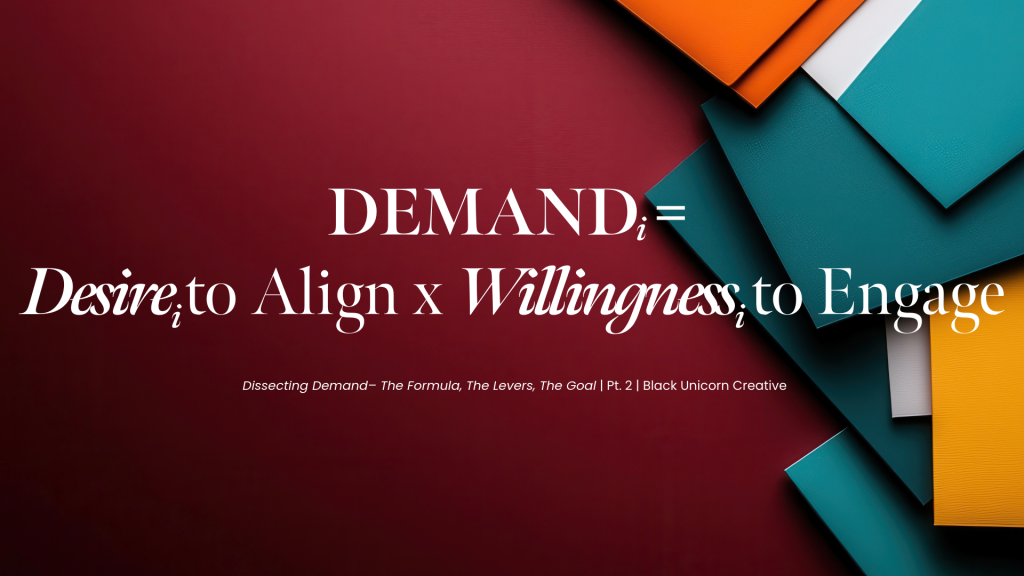
Internal Demand = Desire to Align × Willingness to Engage
- Desire to Align → The emotional, aspirational, and cultural pull that draws top talent to your brand.
- Willingness to Engage → The trust and support employees feel in the culture, leadership, and environment that sustains their commitment.
If people love your mission but feel undervalued, overworked, or disconnected, they’ll disengage. If your culture drifts from your brand promise, your best people will leave.
The brands that win long-term don’t just market well externally—they operate with clarity and cohesion internally so employees feel the same pride and belonging as customers.
Strengthening Desire to Align
Contrary to popular belief, people don’t just take jobs—they join environments where they feel aligned. In today’s workplace, alignment is everything.
Levers That Build Alignment:
Leadership Authenticity → Employees align with leaders before logos. Culture is modeled daily—not in handbooks, but in conversations, decisions, and presence.
Purposeful Growth → Scaling without clear purpose dilutes culture and values. Every hire, partnership, and strategic move should reinforce your vision—not compromise it.
Cultural Momentum → A living, evolving culture keeps people engaged. When leadership stalls progress or dismisses contributions, energy fades.
Brand Narrative & Identity → Internal culture must reflect external messaging. If you market innovation but operate with red tape and rigid processes, people notice.
Sustaining Willingness to Engage
Attraction gets people in the door. Engagement keeps them there.
Levers That Sustain Engagement:
- Trust & The Four Safeties (Physical, Mental, Emotional, Spiritual)
People stay engaged where they feel safe to think, contribute, and be themselves. Without trust, alignment is temporary. Harvard Business Review notes that high-trust companies see 50% higher productivity and 76% more engagement. - Recognition & Contribution Culture
People want to know their work matters. Recognition works best when it’s tangible, unexpected, personal, and public—not just a shallow “good job.” - Leadership Consistency
If leaders say one thing and do another, trust erodes. Deliver internally on the same promises made to customers. - Cultural Adaptability
Alignment isn’t static. Evolve with industry shifts, workforce needs, and new realities—or risk losing relevance. - Workload Sustainability
Energy is as valuable as output. Overwork and burnout are engagement killers. Value contribution without glorifying exhaustion.
Brand Attraction vs. Brand Attrition
When your internal culture doesn’t match your external identity, one of two things happens:
- Attraction Fades → Top talent stops seeking you out.
- Attrition Rises → Your best people disengage and leave—physically or mentally.
Even iconic companies like Google and Amazon have struggled when internal realities failed to match the external brand story.
When internal demand is high, employees are aligned with your purpose and energized in their roles. When it’s low, disengagement spreads, talent walks, and even your external brand begins to crack.
The rise of the creator economy, gig work, and fractional leadership is a direct response to companies failing to create workplaces where people feel valued and aligned. People now choose autonomy over misalignment. If your organization can’t adapt, you’ll struggle to attract and retain the talent you need and you’ll pay more to hire it back fractionally.
Attract YOUR People
Future talent (employees) within your business makes choices based on brand understanding the same way customers do. They choose where to work based on emotional connection, identity, and values. They stay based on trust, leadership, and day-to-day experience.
If you don’t reinforce your values internally, you won’t sustain your reputation externally.
Ask yourself:
- What daily practice in your business directly connects to the values you promote to customers?
- How does your team reflect your organization’s values in real operations?
- Can you fill in this sentence? We are __________ for our customers, and that looks like __________ for our team.
Build a culture people want to belong to, and you’ll build a brand customers want to buy from.

